NBA News From The Athletic
The Athletic: Caleb Wilson could make this a Big 4 at the top in latest Mock Draft
NBA Draft season has begun so Sam Vecenie from The Athletic has an updated 2026 NBA Mock Draft.
Sam Vecenie, The Athletic
April 29, 2026 7:46 PM
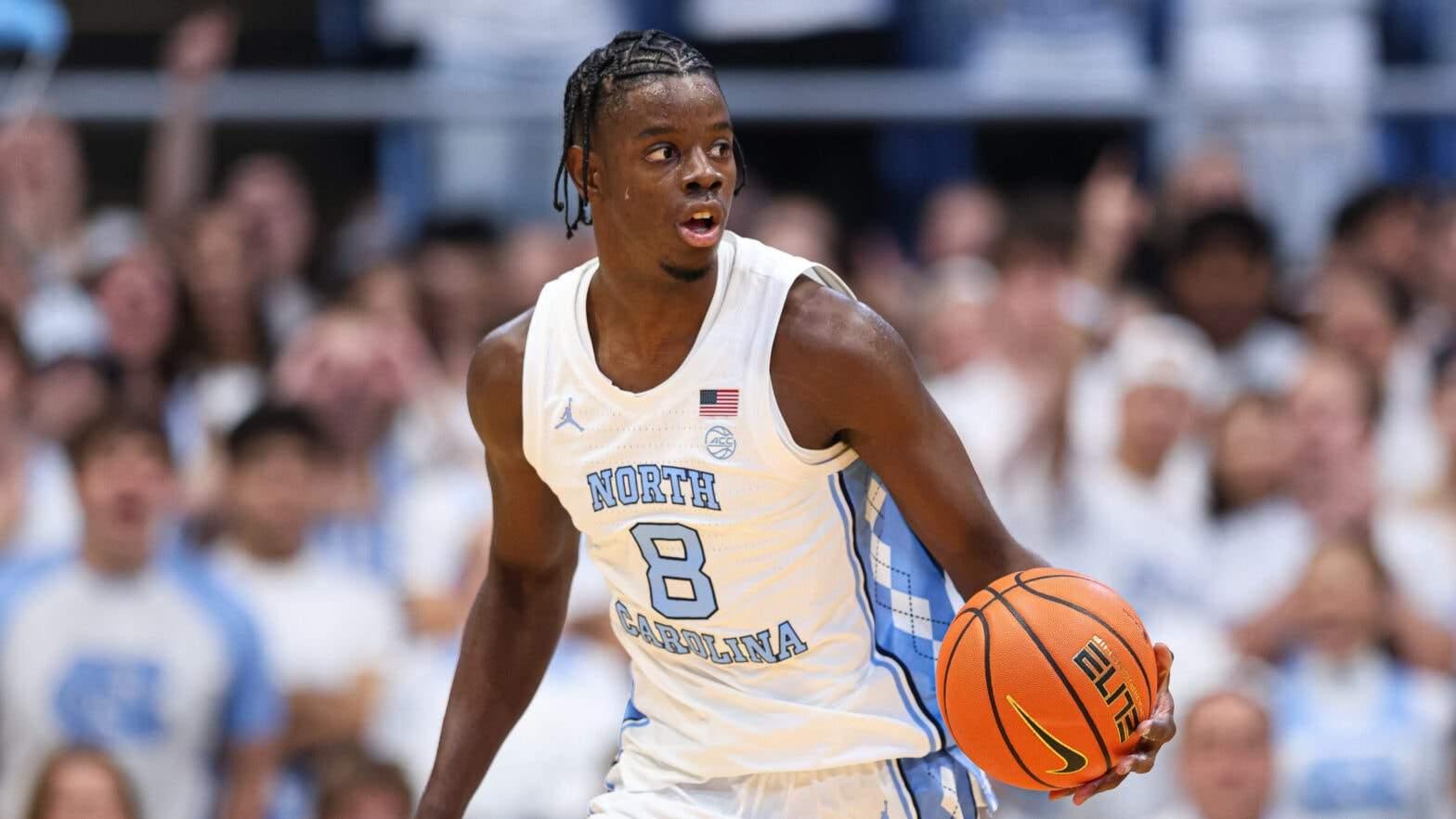
Despite missing the last month of the college season with hand injuries, UNC’s Caleb Wilson is No. 4 in the latest Mock Draft.
Editor’s Note: Read more NBA coverage from The Athletic here. The views on this page do not necessarily reflect the views of the NBA or its teams.
• 2026 NBA Draft: Complete coverage
As NBA teams have made clear through their tanking measures, scouts are very excited about the top end of this class. With Kansas’ Darryn Peterson, BYU’s AJ Dybantsa, Duke’s Cameron Boozer and North Carolina’s Caleb Wilson, at least four teams are going to walk away from the lottery with serious levels of excitement.
Scouts are also excited about the guard group from No. 5 to No. 10, including Louisville’s Mikel Brown Jr., Arkansas’ Darius Acuff Jr., Illinois’ Keaton Wagler, Arizona’s Brayden Burries and Houston’s Kingston Flemings. From there, the draft starts to get complicated. From No. 10 or so down through No. 25-ish, there is very little consensus among scouts.
The biggest discussion surrounding the depth involves the name, image and likeness (NIL) marketplace and transfer portal. How many players will risk being a late-first or early second-round pick when they have potentially $4 million waiting for them if they return to school? We already have a partial answer on that, as only 71 players decided to declare for the draft as early entrants, the lowest number in years. The reality is that many players decided to lock in their money now and stay in school, knowing that colleges might not keep their roster spot available through May.
Now the question shifts to here: How many NBA teams will give first-round promises to prospects and their agents? Typically, promises are difficult to receive. But will more teams in the 30s look to try to promise surprising players to try to keep them in the class? Strategic draft considerations on both the player and team side are shifting under our feet. The finances in college have become so great that draft decisions are no longer as automatic as, “If you’re projected as a first-round pick, you should leave.” We’re set for what will be a wild game of chicken when it comes to prospects over the next month.
A few other notes:
- Every time I do one of these, I get asked where certain players are. If a freshman isn’t in the consensus top 35 based on the feedback I get from teams, I did not place them here. It would be a poor decision for such prospects to leave, given the three years of earning potential in college they would be passing up for an uncertain fate. Additionally, I’m going a bit off feel and intel that I’ve gathered at this point as to whether or not players are staying in the draft. The players I have not included here who have declared for the draft early include Tyler Tanner, Flory Bidunga, Billy Richmond III and Rueben Chinyelu, among others. My guess is that players like this will simply have better options available to them financially by returning to college in today’s ecosystem. If they decide to stay in the draft past the early-entry withdrawal date, I will mock them at that point.
- Ages are as of draft night in 2026 (June 23).
- Heights for college freshmen are what their schools list.
- Draft order is based on standings at the end of the regular season, while also doing a spin of the lottery wheel provided by the good folks over at Tankathon. I did one spin, and this was the order it spat out.
- Scouts were granted anonymity in exchange for speaking freely about prospects.
FIRST ROUND
1. Utah Jazz
AJ Dybantsa | 6-9 wing | 19 years old | BYU
Dybantsa is the name I get most at No. 1. He’s a dynamic, explosive scorer whose three-level scoring ability at 6 feet 9 shone brightly this season. Dybantsa averaged 25.5 points, 6.8 rebounds and 3.7 assists while shooting 51 percent from the field, 33.1 percent on 3-pointers and 77.4 percent from the free-throw line while getting there 8.5 times per game. He and Michael Beasley are the only two freshmen in college basketball history — stretching back to 1953-54, per Basketball-Reference — to average 25 points, shoot 50 percent from the field and take at least eight free-throw attempts per game. He plays with serious bend mixed with explosiveness, allowing him to consistently get into the teeth of the defense as a straight-line driver. In transition, he’s a menace. His midrange game has become a serious weapon. He’s also not a finished product. It’s clear where the improvement areas are for him. His jumper will get better as he ages. He improved drastically as a passer this season but has even more room for growth there when he plays next to more talented NBA players. And defensively, Dybantsa is not nearly as impactful as his measurements suggest he could become. Dybantsa is seen as having extremely high upside with a tremendously high floor. He’s a safer pick than Peterson. His offensive game is more well-rounded than Wilson’s. And scouts believe his athletic upside gives him a stronger chance to be a No. 1 option than Boozer.
2. Washington Wizards
Darryn Peterson | 6-5 guard | 19 years old | Kansas
Peterson’s strange collegiate journey complicated his evaluation. He did play at least 28 minutes in each of his last nine games, and scouts aren’t all that worried about why he was only playing halves of games. Scouts connected with Kansas were always much less concerned about that than the media, as Peterson was dealing with legitimate injuries. NBA teams will also see Peterson’s medical testing at the draft combine, which should provide more answers. Peterson’s talent as a shot-making scorer is undeniable. He averaged 20.2 points while shooting 43.8 percent from the field, 38.2 percent from 3 and 82.6 percent from the line. He drilled an incredible number of difficult pull-up jumpers from all levels. However, his ability to get to the rim has come into question, as scouts wonder if life will be more difficult for him creating easy shots at the next level. Part of these issues at Kansas could have simply been because of his injuries; he looked less explosive than he was in high school. Another part could have been the Jayhawks’ lack of spacing. It was not dissimilar to what Anthony Edwards looked like at Georgia.
3. Atlanta Hawks (via NOP)
Cameron Boozer | 6-9 forward | 18 years old | Duke
The Hawks move up in my lottery spin for this pick, acquired from the New Orleans Pelicans in last year’s draft-night trade. Boozer is the safest bet in the class to become a highly productive player. The consensus around the NBA that the son of Carlos Boozer will follow in his father’s footsteps as an All-Star. The consensus falls apart over whether he profiles as a No. 1 option. Boozer’s games in both the ACC and NCAA tournaments raised questions for scouts about building their team around him. In Duke’s seven postseason games, Boozer shot just 44 percent from the field and 32 percent from 3. He was remarkably productive, but his below-the-rim finishing ability was messy against players with legitimate NBA interior size such as Virginia’s Ugonna Onyenso. If Boozer were as tall as Nikola Jokić, this evaluation would be much easier. Jokić entered the league around 6-11 in shoes with a 7-3 wingspan; Boozer is expected to measure more in the 6-9 range with a 7-foot wingspan. He’s more the size of Kevin Love than Jokić, whose height and length allow him to use his special touch to get shots off from wild angles. Can Boozer consistently separate and draw help defenders in the NBA the same way he did in high school and college? Still, he averaged 22.5 points, 10 rebounds and four assists on his way to the national player of the year award, largely because of the myriad ways Duke proved that you can use him.
4. Memphis Grizzlies
Caleb Wilson | 6-10 wing | 19 years old | North Carolina
Wilson missed the final month of the season with a broken right thumb and a broken left hand. Before that, he averaged 19.8 points, 9.4 rebounds, 2.7 assists, 1.5 steals and 1.4 blocks and was good in just about every game he played. It’s all about power and explosiveness for Wilson. He plays with terrific bend and balance as a driver. Combine that with his strength and leaping ability, and you get a special player who can dominate at the rim. The further into the cycle we get, the more I hear from scouts who see Wilson in the same group as Peterson, Dybantsa and Boozer, with some even ranking him as a top-three player in the class. It didn’t hurt Wilson’s case that he outperformed all three of those players when North Carolina played them this season (in Dybantsa’s case, in the preseason, but still). Wilson’s flaws are easier to scout than the others’, though. He doesn’t take many 3s (he was just 7-of-27 shooting on the season), although his mechanics looked good from the extended midrange area. Defensively, the block and steal numbers are strong, but he’s not as twitchy on the ball as you’d expect for an athlete of his caliber; plus, he’s messy off the ball with his rotations and with how quickly he reacts. Most of his assists come on pre-ordained reads within structure, rather than when he’s on the move and reacting. But the reality is that few players consistently play with his type of motor and aggressiveness. He has many similarities to Pascal Siakam, who has made multiple All-NBA teams.
5. LA Clippers (via IND)
Keaton Wagler | 6-6 wing | 19 years old | Illinois
The Clippers received this pick from the Indiana Pacers in my spin after a creatively structured pick protection in the Ivica Zubac trade. LA gets this pick if it falls from No. 5 to No. 9. If the Clippers end up here, they would be in a tricky spot. Most of the players projected in this range are lead guards such as Acuff, Flemings, Wagler and Brown. However, the team already has its long-term lead guard signed to a large contract in Darius Garland. Wagler is probably the best fit with his size and ability to shoot off the catch. He is unequivocally this year’s biggest draft riser and maybe the biggest draft riser in the one-and-done era after leading Illinois to the Final Four. Wagler is not very quick-twitch with his first step, and he has very little vertical explosiveness. He’s also not all that strong. But he uses the threat of his pull-up jump shot better than any player in the class and plays with an incredibly rhythmic, well-paced tempo that makes it hard for opponents to stay in front of him.
6. Brooklyn Nets
Darius Acuff Jr. | 6-2 guard | 19 years old | Arkansas
Acuff earned first-team All-America status by dominating games down the stretch. Over his final 13 games, he averaged an absurd 28 points per game and 6.7 assists while getting to the line 7.5 times per game. He was efficient and sharp, shooting 48 percent from the field and over 40 percent from 3. Acuff might be the most polished freshman guard prospect I’ve ever evaluated. His footwork and balance are pristine, and he tends to make efficient decisions. He plays off two feet and moves well without the ball to set up his on-ball moves. His passes are always crisp and on-target, even if his vision isn’t always elite. But can he consistently get paint touches against NBA length, and can he guard anybody? In terms of the former, he’s done just about everything in his power to make me a believer that he can separate, thanks to the threat of his shot and elite pace. But the latter is another story. Even though Acuff is stocky and strong, he’s easily the worst defender among the top 10 prospects. He struggles to get through screens and shows a lack of off-ball engagement too regularly.
7. Sacramento Kings
Kingston Flemings | 6-4 guard | 19 years old | Houston
Flemings is a wildly explosive and powerful lead guard, using a lightning-quick first step to get by defenders with ease. Despite playing in an offense in which he had precious little space around him, he averaged 16.1 points and 5.2 assists while shooting 47.6 percent from the field and 38.7 percent from 3. You can see his burst every time he touches the court. He’s also an excellent decision-maker who improved defensively throughout the season. The main concerns revolve around his jumper consistency and the way that he scores. Flemings’ percentages dropped in Big 12 play. In his final 14 games, he shot just 41.3 percent from the field and got to the line only three times per game. Scouts wonder if he can consistently get to the rim. Houston’s rim pressure this season was among the worst in the country, and Flemings only averaged 51.2 percent at the rim in half-court settings, per Synergy. Was that a function of Flemings settling, or is it a flaw in his game? Flemings needs to improve his footwork on his gathers around the rim, but scouts should still be excited about how his speed and decision-making will translate to the next level, where he will get the kind of pace and space that will transform his game.
8. Dallas Mavericks
Brayden Burries | 6-4 guard | 20 years old | Arizona
Burries was the leading scorer on one of the top three teams in the country, despite a slow start that saw him average just 7.8 points in his first five games. From that point, he averaged 17.3 points while shooting 51 percent from the field, 41 percent from 3 and 81 percent from the foul line in his final 34 games. He’s also an aggressive rebounder who grabbed 5.5 boards per game in that time, while averaging 2.4 assists as a solid ball mover who didn’t take many bad shots. The question is about separating from his man consistently, as he’s more of a power guard who uses the threat of his shot to keep defenders off-balance. Burries turned into a really good defender by the end of the year and averaged 1.5 steals. If Dallas plans to kickstart its rebuild around Cooper Flagg with Kyrie Irving as the point guard, Burries would be a great fit between them.
9. Milwaukee Bucks
Mikel Brown Jr. | 6-4 guard | 20 years old | Louisville
Brown’s best flashes were those of a top-five pick. He dropped 45 points with 10 made 3s in a game against NC State, then followed it up with 29 points, six assists and three rebounds against Baylor and 29 points, five rebounds and four assists against SMU. When Brown had it rolling, there was not a more dynamic ball-screen playmaker in college basketball. He has range out to 30 feet, and his vision as a playmaker for others exceeds everyone in the class when playing in a screen. If anyone in this deep draft class could average nine or 10 assists per game in the NBA, it’s Brown. So why does he slip to No. 9? Some negative aspects of his game resemble the issues LaMelo Ball has, while he’s not quite as dynamic as Ball is in his best moments. First and foremost, Brown is extremely wild. The turnovers are an issue. He hasn’t figured out how to moderate his decision-making. Second, his defense is a work in progress. He’s a serious negative in switch situations against stronger players, and his off-ball instincts are hit or miss. Brown’s back injury recurred later in the season, too, causing him to miss the postseason. He got very little time off from the end of his high school season to the start of his college season, going from the all-star circuit directly into the under-19 World Cup and then into Louisville’s preseason. Scouts want to know if Brown’s back is merely a short-term issue from overuse or if it could be a long-term problem.
10. Chicago Bulls
Aday Mara | 7-3 big | 21 years old | Michigan
Mara, by far, helped himself the most in the NCAA Tournament. I had a vote for Final Four Most Outstanding Player and chose Mara because of how he dominated the semifinal against Arizona (going off for 26 points, nine rebounds, three assists and two blocks) and how he completely changed the geometry defensively against Connecticut with his ability to guard Tarris Reed Jr. on an island while also shutting down the interior for drivers. Three years into his college career, Aday Mara has rediscovered his joy — and emerged as one of the nation’s best defenders. Mara combines two skills NBA teams seek in their centers: the ability to shut down the paint and the ability to read the court out high as a passer. Opponents shot 54.5 percent at the rim this season when Mara was on the court compared to better than 60 percent when he was off it, per CBB Analytics. Opposing teams also shot just 36 percent on 2-pointers from the paint when Mara was on the court. On offense, Mara is terrific at using his height and feel for the game to dissect what is happening and make the right passing reads, be it a simple handoff or a more complex reaction to find a cutter at the rim. He dished out 2.4 assists per game and shot 66.8 percent from the field. Mara’s hands can be an issue with bobbles and turnovers, and his lateral foot speed is concerning. But the Bulls desperately need a defensive anchor.
11. Golden State Warriors
Yaxel Lendeborg | 6-9 big | 23 years old | Michigan
Even though Lendeborg gutted through an ankle injury in the Final Four, he led Michigan to a title and transformed his game. His counting numbers were down from his heights at UAB, but he averaged 15.1 points, 6.8 rebounds and 3.2 assists while playing aggressive defense. He showcased serious switchability, often picking up lead ballhandlers at the point of attack as well as playing against power forwards when Mara or Morez Johnson Jr. would leave the court. He’s also an active help defender with excellent hands. He drilled 37.4 percent of his 3s for the season, thanks to a hot streak at the end of the year in which he made 48.1 percent over his final 16 games — and that includes a 0-of-5 mark when he was clearly hobbled against UConn in the title game. The Warriors could use another big wing next to Stephen Curry and Draymond Green as they near the end of their careers.
12. Oklahoma City Thunder (via LAC)
Nate Ament | 6-10 wing/forward | 19 years old | Tennessee
Ament’s season was a true roller coaster, and his draft stock is a bit funky as a result. He averaged 14.7 points, 6.5 rebounds and 2.6 assists per game in his first 15 games but was only shooting 40 percent from the field and 27 percent from 3. Those numbers were also buoyed by big games against bad teams, like his 23 points against Northern Kentucky, his 19 against Rice and North Florida and his 20 against Rutgers. Then, over 12 games before he sprained an ankle in Tennessee’s game against Alabama, few players were better in high-major conference play. He averaged 22 points, 6.8 rebounds and 2.5 assists while shooting 44 percent from the field, 38 percent from 3 and 84 percent from the line while getting there a ridiculous nine times per game in that run. But when he returned for postseason play, he clearly wasn’t 100 percent. He averaged just 13.3 points while shooting 31.3 percent from the field, including 28.6 percent from inside the arc as he had zero lift. Still, that issue with his scoring inside the arc showcases problems with his game. He’s still quite skinny, and scouts aren’t sure how his frame will fill out. He added a lot of good weight in the offseason leading into his freshman year, which allowed him to at least deal with the rigors of college basketball. However, he doesn’t have a ton of athletic explosiveness. His finishing at the rim has been concerning when he doesn’t get fouled, as he made a ridiculously low 42 percent of his shots at the rim at 6-10, per Synergy. The 6-foot-10 sharpshooter struggled early in his freshman season but has recently shown what all the preseason top-5 buzz was about. Teams that I’ve spoken with are divided on Ament. Some scouts see him as an option in the top eight, while others see him outside the top 20 because of his lack of strength and explosiveness.
13. Miami Heat
Labaron Philon Jr. | 6-3 guard | 20 years old | Alabama
Philon returned to school at the last minute last May, and he took advantage of his extra year. He stepped into Alabama’s lead guard role and averaged 22 points, 3.5 rebounds and five assists per game while shooting 50 percent from the field, 39 percent from 3 and 80 percent from the foul line. Though his defense took a step back from last season, when he was terrific while playing next to Mark Sears and only sharing the on-ball responsibilities, he was one of the best offensive players in the country. So why is he not higher? First, this class is loaded with truly elite point guards like Brown, Acuff and Wagler. Second, teams worry about his frame and that he seemingly has not put on much mass this year after returning to school. Third, Alabama’s scheme is clearly favorable to him and gives him the space and time he desires to operate, both in half-court and transition settings.
14. Charlotte Hornets
Hannes Steinbach | 6-11 big | 20 years old | Washington
Steinbach is the next center on the board whom scouts feel strongest about. The best rebounder in the draft, Steinbach has massive hands that he uses to his utmost potential both in ball screens and on the glass. He averaged 11.8 rebounds per game this year, including a monstrous 4.2 offensive rebounds per game that would fit incredibly well with what the Hornets are building scheme-wise under Charles Lee, as they care immensely about the possession battle. Steinbach also moves very fluidly and has huge, broad shoulders that he uses well in screens and also has strong timing as a roller. He averaged 18.5 points this year for Washington, a team that had horrendous point guard play and even less spacing around him, as they shot just 31.5 percent from 3. And yet still, Steinbach shot 62 percent from 2-point range and 58 percent from the field. He also showcases potential as a shooter, having made 34 percent of his two 3-point attempts per game. Defensively, Steinbach doesn’t move well laterally in space, and I didn’t think he was an overly impactful rim protector. His range seems to be in the N0. 10 to No. 20 part of the draft.
15. Chicago Bulls (via POR)
Cameron Carr | 6-6 guard | 21 years old | Baylor
Carr had a nuclear hot start to the season and then largely settled in as one of the best high-major scorers in the country. He averaged 18.9 points per game while shooting 49.4 percent from the field, 37.4 percent from 3 and 80.1 percent from the foul line. Carr is a terrific shooter with great straight-line slashing instincts, using his long strides and length to cover ground quickly before getting to the rim. It’s very difficult to find players who are in the ballpark of 6-6 with incredibly long arms like Carr’s who can shoot. His lack of physicality and his high waist show up defensively, as he still doesn’t impact the game unless he’s rotating across for a weakside contest. Carr needs to keep putting on weight and getting stronger and also has to work on playing with more bend and accessing leverage better.
16. Memphis Grizzlies (via PHX)
Koa Peat | 6-8 wing | 19 years old | Arizona
Peat prompts a wide range of opinions from NBA scouts. On the plus side, he has won everywhere he’s been and is one of the most decorated players in his age group. He won state titles and four gold medals with Team USA in youth events, then helped carry Arizona to a Final Four. He averaged 14.1 points while shooting 53 percent from the field and is a tough, physical rebounder. He passes well and makes excellent decisions to keep his team in the flow of the offense, be it in short rolls out of ball screens or on the wing. If you need him to score, he can do that as we saw in the NCAA Tournament, where he averaged 17.2 points and 7.6 rebounds while shooting 48.5 percent from the field and taking a bigger offensive load. Or, he can slide into a role as a tough, physical defender who takes on different matchups and then makes quick reads. Yet, the flaws jump off the page. He’s not really a shooter, as he’s only taken 20 3-point attempts and made seven of them while hitting just 62.3 percent of his attempts at the foul line — basically in line with his averages at lower levels. Defensively, he’s not overly fast, and there are possessions when you see him get beaten laterally by quicker players, although I did think he was a good defender by the end of the season. Ultimately, it’s going to take a team that really values his winning attributes, which the Grizzlies would as they look to build out their core around Cedric Coward, Zach Edey and others.
17. Oklahoma City Thunder (via PHI)
Morez Johnson Jr. | 6-9 big | 20 years old | Michigan
Johnson was one of my favorite players in college basketball. He was one of the most efficient players in the country, averaging 13.1 points per game while shooting 62.3 percent from the field. He got to the foul line four times per game and made 78 percent of those. He’s a tough rebounder who is physical on the interior and crashes with his long arms. But I love Johnson the most on defense; he was the best all-around defender on one of the three best defenses in the nation, and that included Lendeborg and Mara. He’s tremendous as a post defender, flying around in help and showcasing switchability on the perimeter. But Johnson is undersized for his role despite his strength and doesn’t have a ton of offensive versatility. Essentially, he’s a play finisher around the interior. That skill set is reminiscent of Isaiah Stewart, and Stewart has turned into a very valuable player for the Pistons. Oklahoma City has been linked to Stewart before, and even though the Thunder took Thomas Sorber last season, they’re loaded everywhere and can afford to take another big. Teams across the league look at Oklahoma City, as well, as a team primed to likely try to combine its picks to move up or to try to move one of these picks to move out of the draft.
18. Charlotte Hornets (via PHX)
Christian Anderson Jr. | 6-2 guard | 20 years old | Texas Tech
If you made me choose the best shooter in this class, it would be Anderson. He hit 41.5 percent of his eight 3-point attempts per game and is an absurd shot maker at the point guard position. He can make them going to his right or to his left, hits them off the catch after movement or off pull-ups by creating space. He’s also a terrific passer out of ball screens, averaging 7.4 assists per game. The two big questions are simple. First, can Anderson generate consistent paint touches and get to the rim? It was hit or miss in that respect, particularly in Big 12 play. He averaged just five attempts per game inside of 2-point range because of his lack of size and strength. That size question is also an issue on defense, where Anderson is a willing worker and fights for position but isn’t strong enough yet to hold up at the point of attack through his core and lower half. Even with the in-season acquisition of Coby White, the Hornets could use a bit more cover at the backup at the lead guard spot behind LaMelo Ball.
19. Toronto Raptors
Chris Cenac Jr. | 6-10 big | 19 years old | Houston
Cenac is another polarizing prospect. Some view him as a potential lottery pick, while others think he should do another year at Houston. One of the most highly touted prospects in the 2025 recruiting class, Cenac is a flexible athlete who moves well on the perimeter and has a burgeoning offensive game on the outside to match. He played a lot of minutes at power forward for Houston, often sitting in the corners or cutting baseline to space the court. He’s become an awesome rebounder, averaging eight per game in 25 minutes per night. Cenac took