Fantasy NBA Fantasy: Top 150 for 2026-27 Points Leagues
Nikola Jokić and Victor Wembanyama headline the top 150 players for points leagues entering the 2026-27 season.
Alex Barutha, Kirien Sprecher, Nick Whalen – RotoWire.com
September 15, 2026 5:07 PM
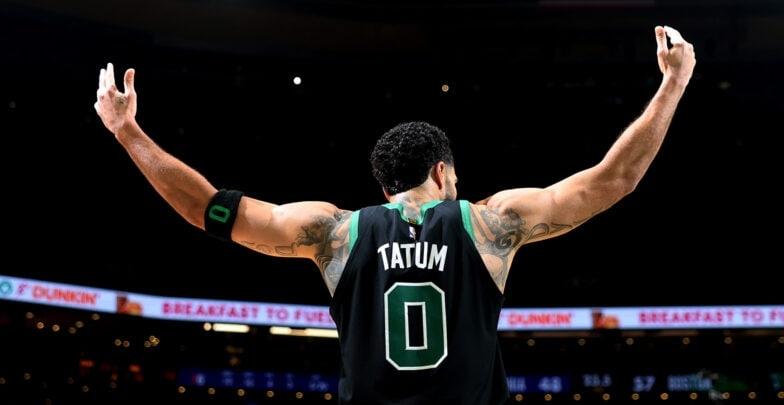
Jayson Tatum is back as a first-round pick in points leagues after recovering from his Achilles tear.
Play Yahoo Fantasy High Score Today!
The NBA preseason is just over two weeks away, meaning it’s time to start preparing for fantasy basketball! If you’re looking for an edge this season, RotoWire has you covered with their early top 150 points league rankings. Read on to see the rankings, plus analysis for each player for points formats, which value box score stats over efficiency.
Round 1
Nikola Jokić, Denver Nuggets — The most bankable box score in the sport. Points, rebounds and assists all at elite volume, in the neighborhood of 70 games, with triple-doubles arriving in bunches. Turnovers are the only real deduction and they’re nowhere near enough to matter.
Victor Wembanyama, San Antonio Spurs — The blocks that make him a category-league cheat code are worth less here, but the rest of the line still plays: 25-plus points, double-digit boards, real assist and steal volume. The gap to Jokić is games played and passing volume, and it’s a small one.
Luka Dončić, Los Angeles Lakers — With LeBron James in Philadelphia, Dončić owns the ball outright. Points leagues don’t care that the efficiency dips when his usage climbs. Dončić is one of the few players who can hit 30/8/8 nightly.
Shai Gilgeous-Alexander, Oklahoma City Thunder — The one first-rounder whose profile is genuinely worse here than in categories. His value leans on scoring efficiency and free-throw accuracy, which points formats mostly ignore. Rebounds and assists are good rather than great. Still a top-five producer, just not the cheat code he is in 9-cat.
Cade Cunningham, Detroit Pistons — Big-usage, ball-dominant guard with a heavy assist load and better rebounding than most point guards. He turns it over a lot, which is the one thing points leagues actually punish him for, but he outruns the penalty by volume. Cunningham will be 25 for the entire 2026-27 season and could still be improving.
Giannis Antetokounmpo, Miami Heat — A worthy top 5 pick in points leagues. The free-throw percentage and the missing threes are category-league problems. In points leagues you just bank 30 points, 11 boards and 6 assists on huge minutes.
Cooper Flagg, Dallas Mavericks — Finished his rookie year on a tear and now gets a full season of it. He fills every row of the box score. Kyrie Irving’s return should help the offense without meaningfully denting his touches.
Jayson Tatum, Boston Celtics — A year removed from the Achilles tear and reinstalled as Boston’s clear first option with Jaylen Brown gone. Volume scoring plus eight rebounds and five assists is a strong points-league base; the only question is whether Boston manages his minutes early.
Tyrese Maxey, Philadelphia 76ers — The draft price assumes a real touch reduction with Brown and James arriving. That’s a fair concern, but Maxey was a 27-and-7 guard last year, and even a meaningful haircut leaves a top-15 points-league line. Watch the minutes reports in camp.
Anthony Edwards, Minnesota Timberwolves — Trading Naz Reid and Julius Randle for LaMelo Ball is a net positive for his supporting cast and a mild negative for his assist rate. Scoring volume is Edwards’ points league engine, though, and that could still increase.
Jalen Johnson, Atlanta Hawks — Johnson is a counting-stat machine — 20/10/6 with steals and blocks — as Atlanta’s franchise piece. Games played is the only bet you’re making.
Scottie Barnes, Toronto Raptors — Swapping Brandon Ingram for Kawhi Leonard trims his usage, but Barnes answers usage dips with rebounds, assists and defensive counting stats, so the total line holds up.
Round 2
Karl-Anthony Towns, New York Knicks — Strip out the shooting percentages that make him a category darling, and you still have a 24-and-12 center. That’s a clean second-round points-league asset, especially when considering center is a position of scarcity.
Alperen Sengun, Houston Rockets — One of the very best values in this format. Sengun is a triple-double threat from the center spot, coming off career highs in assists. Points leagues reward that shape more than any other.
Donovan Mitchell, Cleveland Cavaliers — Reliable high-volume scoring with James Harden absorbing the playmaking. Fewer assists than you’d like at this price, but the points total and the games played are steady year after year.
Kevin Durant, Houston Rockets — Still capable of 26 points a night with good rebound and assist numbers for a wing. He’ll be 38 at the end of September so the risk is rest days and load management, plus the potential for decline. But his role is stable.
Jalen Brunson, New York Knicks — Nothing changed in New York after the title, which means Brunson again leads the league’s most stable offense in usage.
Amen Thompson, Houston Rockets — His shooting splits are the only flaw, and this format barely charges for them. What’s left is a wing putting up points, rebounds, assists, steals and blocks in bulk.
Tyrese Haliburton, Indiana Pacers — An assist monster returning from an Achilles tear into an offense built entirely around him. There could be some load management, and he’s better in category formats.
Jamal Murray, Denver Nuggets — Career-best season, partly propped up by Denver’s injuries. Even with Jokić healthy all year, Murray is the clear second engine on a high-possession offense, which makes his floor unusually high for a mid-second-round guard.
Devin Booker, Phoenix Suns — A down shooting year buried his surface numbers, but he’s still Phoenix’s primary creator and their highest-usage player. Points leagues don’t make you eat the percentages — you just collect the points and assists.
Jaylen Brown, Philadelphia 76ers — Brown is unlikely to reach the volume he did when he was the clear No. 1 option on the Celtics last year. But he’s still going to be a top 2 option for Philadelphia, especially considering presumed absences from Joel Embiid and potential for load management from LeBron James.
Trae Young, Washington Wizards — Ten-assist upside is the most valuable single skill in points leagues outside of raw scoring. Washington has no one else to run the offense. The turnovers sting a little; the assist volume more than covers it.
Austin Reaves, Los Angeles Lakers — Another player whose efficiency risk simply doesn’t apply here. With James gone, Reaves is a high-volume secondary creator with a green light.
Round 3
LaMelo Ball, Minnesota Timberwolves — Per-game production is worth a mid-second pick. Games played is the debate, and now there’s a second question: how much the offense funnels through Edwards.
Kawhi Leonard, Toronto Raptors — Last season’s clean bill of health cuts against a decade of evidence. When he plays, he’s a 24-point scorer with strong defensive counting stats, but a Toronto roster full of options gives him easy excuses to sit when needed.
Anthony Davis, Washington Wizards — Twenty games last year. The per-game profile is still first-round — scoring, double-digit boards, blocks — and in a points league the games he does play pay out enormously.
Paolo Banchero, Orlando Magic — One of the largest format-driven moves on the board. He’s a 25-point, 8-rebound, 5-assist forward, and this format asks you to ignore the percentages and the thin steal and block totals entirely.
Josh Giddey, Chicago Bulls — Career year across the board and a nightly triple-double threat, which is the highest-leverage archetype in this format. Chicago added depth around him, but he remains the offense’s hub.
Domantas Sabonis, Sacramento Kings — With Russell Westbrook retired and DeMar DeRozan in Denver, Sabonis should reclaim a usage share he hasn’t had in two years. Last year’s injuries and team situation has knocked the price down on one of the few triple-double threats at the center position.
Chet Holmgren, Oklahoma City Thunder — A category-league treasure (threes plus blocks from a center) whose raw counting totals are merely good. That doesn’t quite pay off in the same way for points formats.
Deni Avdija, Portland Trail Blazers — An All-Star breakout built on exactly the stats this format pays for — scoring, rebounding and playmaking from a forward. The Ja Morant and Damian Lillard additions are a threat to his touches, which is why he’s a range pick rather than a lock.
Bam Adebayo, Miami Heat — Points, rebounds, assists and steals from the center slot. Sharing the frontcourt with Antetokounmpo may cost him boards, but he’s one of the safest 30-plus-minute bets at the position.
Jalen Duren, Detroit Pistons — Duren is a nightly double-double with rising free-throw, and Detroit did nothing to dilute his role. Low-variance production, though he has a relatively limited ceiling.
Evan Mobley, Cleveland Cavaliers — One of the least controversial players on the board. Cleveland’s third option puts up a quiet 18/10/4 with blocks; the shooting slump that hurt him in categories barely registers here.
Stephen Curry, Golden State Warriors — Curry’s fantasy value is unusually three-point-dependent, not to mention free-throw percentage – and that doesn’t translate well to points leagues. Add age 38 and the discount is justified.
Round 4
Walker Kessler, Los Angeles Lakers — Blocks and field-goal percentage are his calling cards, and this format doesn’t reward both meaningfully. What’s left is rebounds, dunks off Dončić passes and thin assist and free-throw numbers. Let him come to you in the fourth rather than chasing him in the third.
James Harden, Cleveland Cavaliers — Still a 20-and-10 threat, which is exactly the shape you want. Points leagues do charge for his turnovers, unlike the High Score formats where he’s a second-round pick.
Kon Knueppel, Charlotte Hornets — A second-year leap candidate handed Charlotte’s vacated usage after the Ball trade. The upside case is a 20-point scorer with a real assist load; the downside is a player whose value is mostly efficient shooting, which this format won’t reward.
Pascal Siakam, Indiana Pacers — A points league riser. Haliburton’s return means fewer possessions but he’s still Indiana’s No. 2 option. A 20/7/4 forward at this price is solid, dependable points-league inventory.
LeBron James, Philadelphia 76ers — Even in a reduced role, his per-minute box-score output is absurd, and points leagues reward the assists heavily. The bet is that Philadelphia doesn’t cut him to 28 minutes, or that he takes games off.
Brandon Miller, Charlotte Hornets — Charlotte’s most likely usage winner post-LaMelo, with a case for a scoring jump toward 24 a night. The rebounds and assists are adequate, not a selling point.
Jalen Williams, Oklahoma City Thunder — Wrist surgery and a hamstring problem wrecked last season. Healthy, he’s a 20-point wing with balanced secondary stats on a team that will win a lot of games — which in OKC’s case can mean fourth quarters off.
Donovan Clingan, Portland Trail Blazers — Averaged a double-double in 27.2 minutes a game as a sophomore. More minutes is the upside play, as Portland’s frontcourt is his to claim. Blocks are a bonus rather than the point here.
Joel Embiid, Philadelphia 76ers — When he plays, he’s an elite points league producer. But Philadelphia’s upgrades cut both ways: less pressure means fewer minutes, but also less reason to push him. Draft him as a high-variance swing, not a foundation.
Stephon Castle, San Antonio Spurs — One of the format’s best buys. His two flaws — shooting efficiency and turnovers — are the two things points leagues discount most heavily relative to categories. The counting stats are strong.
Trey Murphy III, New Orleans Pelicans — Down compared to category formats. He’s an efficient scorer and high-volume three-point shooter, which is a category-
NBA Fantasy: Top 150 Rankings for 2026-27 Points Leagues