Fantasy NBA High Score: Top 150 for 2026-27
Nikola Jokić, Luka Dončić and Victor Wembanyama headline the top 150 players for High Score leagues entering the 2026-27 season.
Alex Barutha, Kirien Sprecher, Nick Whalen – RotoWire.com
September 22, 2026 · 6:48 PM
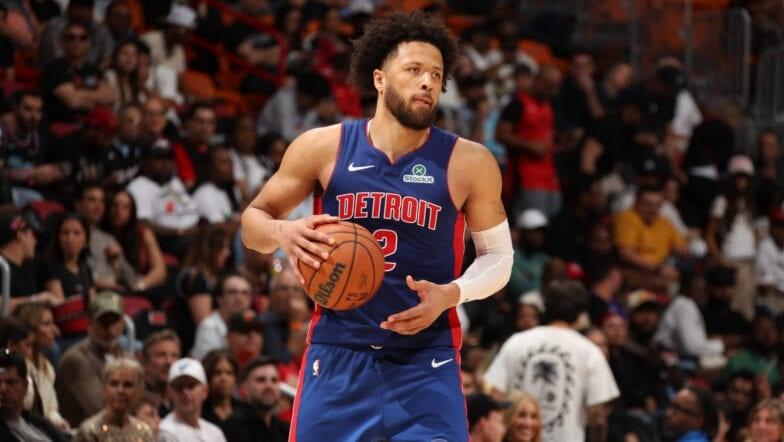
Cade Cunningham doesn't get hurt for turnovers or missed threes, making him a worthy top-five pick in High Score.
Play Yahoo Fantasy High Score Today!
The preseason is less than two weeks away, and it's time to start preparing for Yahoo High Score leagues!
A quick reminder that this format rewards more for assists, takes away turnovers, and only counts the highest score from your starters each week. That brings up high-usage players with turnover concerns, and players who have games-missed concerns tied to their names due to age or injury history.
Round 1
Nikola Jokić, Denver Nuggets — Eleven assists at two apiece, and nothing clawed back by turnovers. The largest weekly ceiling in the sport.
Victor Wembanyama, San Antonio Spurs — Everything that makes him elite still counts; the only gap to Jokić is passing volume, which is the one thing this format pays a premium for.
Luka Dončić, Los Angeles Lakers — He owns the ball with LeBron gone, and his single biggest deduction, averaging over four turnovers a night, has been deleted in High Score.
Cade Cunningham, Detroit Pistons — A Round 1 High Score winner: a heavy assist load worth double, and the turnovers that came with it cost nothing.
Giannis Antetokounmpo, Miami Heat — Thirty points, 11 boards and six assists on huge minutes, with the turnovers and free throws both off the sheet.
Shai Gilgeous-Alexander, Oklahoma City Thunder — Scoring efficiency and free-throw accuracy don't score, and his assist total is good rather than great. He's a faller relative to category leagues and standard points formats.
Jayson Tatum, Boston Celtics — Boston's clear first option with Jaylen Brown gone, and early-season minutes management does much less damage when only his best game counts.
Jalen Johnson, Atlanta Hawks — A 20/10/10 threat, and the games-played bet you're making shrinks to almost nothing when one game carries the week.
Anthony Edwards, Minnesota Timberwolves — Scoring volume is the whole engine, so the assist dip that comes with LaMelo Ball running more offense costs him more here than it would elsewhere.
Cooper Flagg, Dallas Mavericks — After a fantastic rookie season, Flagg should be able to take a step up in Year 2. His relative lack of 3-point shooting doesn't cost you in High Score.
Tyrese Maxey, Philadelphia 76ers — A real touch reduction is coming with Jaylen Brown and LeBron James. He can make up for it with efficiency in category formats, but not here.
Scottie Barnes, Toronto Raptors — Kawhi Leonard trims his usage, but Barnes answers with rebounds, assists and defense.
Round 2
Alperen Sengun, Houston Rockets — Career-high assists from the center spot with the turnovers that come attached wiped off the scoresheet. One of the best values in the format.
Karl-Anthony Towns, New York Knicks — Almost nothing changed with the Knicks, so Towns' role is secure. He's a nightly 20-and-10 threat and showed improved playmaking in the postseason.
Donovan Mitchell, Cleveland Cavaliers — Steady high-volume scoring, but Harden has the playmaking and the thin assist total costs more here.
Kevin Durant, Houston Rockets — Remains one of the league's elite scorers, though his efficiency doesn't give you a boost on its own in High Score, making him less valuable.
Jalen Brunson, New York Knicks — Usage leader on the league's most stable offense, with the assists to match.
Amen Thompson, Houston Rockets — Points, rebounds and assists in bulk, and the shooting splits that are his only flaw don't exist in this format.
Tyrese Haliburton, Indiana Pacers — An assist monster in an offense built entirely around him, and load management is close to a non-issue when a two-game week still produces one enormous score.
Trae Young, Washington Wizards — Ten assists is 20 points before he scores, and the turnovers that always came with them are now free. A significant riser compared to standard points leagues.
Jamal Murray, Denver Nuggets — Clear second engine on a high-possession offense coming off a career-best campaign.
Devin Booker, Phoenix Suns — Phoenix's primary creator and highest-usage player. His declining 3-point rate doesn't matter in High Score.
Austin Reaves, Los Angeles Lakers — A high-volume secondary creator with a green light and neither an efficiency nor a turnover tax.
LaMelo Ball, Minnesota Timberwolves — Huge per-game production, a huge turnover rate and spotty availability. This format forgives two of those three.
Round 3
Kawhi Leonard, Toronto Raptors — One of the best players in the NBA when available, and you only need one big night out of him for it to pay off in this format.
Anthony Davis, Washington Wizards — Twenty games last year attached to a first-round per-game profile, which in a best-game format means the weeks he plays at all pay out nearly in full.
Paolo Banchero, Orlando Magic — A high-usage forward with a high turnover rate that no longer costs him anything.
Josh Giddey, Chicago Bulls — A nightly triple-double threat as the hub of the offense, with the assists worth double and the turnovers free.
James Harden, Cleveland Cavaliers — A 20-and-10 threat with the assists worth double and the turnovers erased entirely. A riser in this format compared to other points formats.
Domantas Sabonis, Sacramento Kings — Rebounds and assists in bulk from center, with usage returning now that Westbrook and DeRozan are gone.
Jaylen Brown, Philadelphia 76ers — Won't have the volume of touches he saw last season, but is still a better High Score player than category-league one.
Chet Holmgren, Oklahoma City Thunder — His 3-and-D profile as a big man isn't rewarded here like it is in category formats.
Deni Avdija, Portland Trail Blazers — Scoring, rebounding and real playmaking from a forward; Morant and Lillard are the threat to the touches.
Bam Adebayo, Miami Heat — The assist volume is what separates him from the other bigs in this range, and he's one of the safest 30-minute bets at the position.
Jalen Duren, Detroit Pistons — A nightly 20-and-10 threat whose game is still developing on both ends of the floor.
Evan Mobley, Cleveland Cavaliers — A quiet 18/10/4 as Cleveland's third option. Steady rather than explosive.
Round 4
Stephen Curry, Golden State Warriors — 3-point-dependent value in a league with no 3-point category, at 38 years old.
Julius Randle, Brooklyn Nets — Expected to lead Brooklyn in combined points, rebounds and assists – which makes him a buy in this format.
Walker Kessler, Los Angeles Lakers — Rebounds and dunks off Luka Dončić passes with blocks. There should be plenty of big nights.
Kon Knueppel, Charlotte Hornets — The upside is a 20-point scorer with more assists; the base case is efficient shooting, which scores nothing extra in High Score.
Pascal Siakam, Indiana Pacers — A dependable well-rounded statline as Indiana's clear No. 2 option.
LeBron James, Philadelphia 76ers — The per-minute output is absurd and the assists are the most rewarded part of it, so a 28-minute role or a night off costs you far less than the draft price assumes.
Brandon Miller, Charlotte Hornets — Charlotte's most likely usage winner post-LaMelo, with adequate secondary stats.
Jalen Williams, Oklahoma City Thunder — A healthy 20-point wing with balanced production, though he gains more in category formats.
Stephon Castle, San Antonio Spurs — His two flaws are shooting efficiency and turnovers, and High Score charges for neither. One of the format's best buys.
Joel Embiid, Philadelphia 76ers — An elite producer when he plays, and this is the only format where a 40-game season is close to fine. Draft the upside swing — the rules absorb it.
Darius Garland, Los Angeles Clippers — Should have plenty of 20-and-10 nights as the Clippers' primary playmaker.
Donovan Clingan, Portland Trail Blazers — Averaged a double-double in 27 minutes; the frontcourt is his to claim.
Round 5
Trey Murphy III, New Orleans Pelicans — An efficient high-volume shooter with modest rebounds and assists, and Dejounte Murray's return trims the usage.
Derrick White, Boston Celtics — Solid all-around, but the low turnover rate is no longer an edge and there are fewer shots with Jayson Tatum back and Paul George added.
Lauri Markkanen, Utah Jazz — Scoring and rebounding with very little playmaking, on a roster that just added mouths to feed.
Kyrie Irving, Dallas Mavericks — The clean efficiency and league-best turnover rate that make him a standout elsewhere are worth nothing here.
Cameron Boozer, Memphis Grizzlies — Immediate minutes and playmaking responsibility, and rookie mistakes don't cost you here.
Franz Wagner, Orlando Magic — A balanced offensive line that's secure behind Banchero, and two injury-shortened seasons aren't as scary in High Score.
Matas Buzelis, Chicago Bulls — Led every Bull not named Giddey in counting stats in under 30 minutes.
Jaren Jackson Jr., Utah Jazz — Utah's crowded depth chart is the ceiling problem.
Onyeka Okongwu, Atlanta Hawks — A double-double baseline on 32 minutes a night.
Ivica Zubac, Indiana Pacers — Bounce-back candidate with Haliburton feeding him easy interior looks.
Tyler Herro, Milwaukee Bucks — The first true lead-playmaking role of his career, and the injury history that always capped him is much cheaper to carry here.
De'Aaron Fox, San Antonio Spurs — Castle and Harper ate into the usage, but a healthy Fox is still a 22-and-6 guard.
Round 6
Brandon Ingram, Los Angeles Clippers — A 20/5/5 forward in the clear top two of his offense who typically slips due to injury history, but that matters less in High Score.
Keyonte George, Utah Jazz — All-Star-level production in a limited sample, but Darryn Peterson, Jaren Jackson and Lauri Markkanen all need touches.
Dejounte Murray, New Orleans Pelicans — Points, assists and steals in bulk when right, though it remains unclear exactly how much his minutes and usage will be pushed.
Desmond Bane, Orlando Magic — Safe as Orlando's No. 3 option, thin outside of scoring and some light supplementary stats.
Zach Edey, Memphis Grizzlies — Excellent per-minute rebounding and scoring. Some managers are concerned about recurring ankle injuries, but that matters less here.
Damian Lillard, Portland Trail Blazers — Even a diminished Lillard produces points and assists at volume, and a year off an Achilles is a much smaller weekly problem than a seasonal one.
Dyson Daniels, Atlanta Hawks — A low-usage wing with a well-rounded line and little playmaking volume to lean on.
Nickeil Alexander-Walker, Atlanta Hawks — A 3-and-D profile with little volume to accumulate.
Zion Williamson, New Orleans Pelicans — A volume scorer with rebounds and assists chipped in, and the availability discount that defines his price mostly evaporates here.
Ryan Rollins, Milwaukee Bucks — Coming off a breakout campaign, but Milwaukee's backcourt logjam makes his role less clear than managers would like it to be.
Coby White, Charlotte Hornets — Now the unambiguous starting point guard, and the injury-hit final season in Chicago overstates the risk.
Michael Porter Jr., Brooklyn Nets — Punished by High Score settings that don't inherently reward efficiency and 3-point volume.
Round 7
Kel'el Ware, Milwaukee Bucks — He just needs the minutes, and a rebuilding Milwaukee will probably supply them.
Naz Reid, Charlotte Hornets — Past 30 minutes for the first time, with scoring, rebounding and a bit of playmaking.
OG Anunoby, New York Knicks — A secure role, though his 3-and-D profile doesn't provide as much fantasy potential in High Score.
Rudy Gobert, Minnesota Timberwolves — A clean bill of health despite his age and a walking double-double.
Derik Queen, New Orleans Pelicans — Eighty-one games as a rookie with a complete game built for fantasy basketball.
Min
NBA Fantasy: Top 150 Rankings for 2026-27 High Score Leagues