GOAL
Tom Hindle | Apr 22, 2026 05:39+06:00
Chucky Lozano exile, stale tactics and a winless run: What is going wrong for San Diego FC?
FEATURES
San Diego FC | M. Varas | H. Lozano | Major League Soccer
San Diego FC, after performing so well in their inaugural season, have struggled immensely to find their rhythm in their sophomore season. And something might have to change.
There's a really good social media account that got big a few years ago called "When Playing It Out of the Back Goes Wrong." It takes clips from all over the footballing world of teams trying to play possession soccer from their own goalkeeper, and, in various ways, messing it up. There are penalties, red cards, and, most often, embarrassing goals conceded. It's a great laugh.
And it also plays on something that has gripped the soccer universe for years: the obsession with playing the ball out from the back. It was viewed as this scandalous sort of thing when Pep Guardiola brought it back with Barcelona in 2009. We were told that you simply cannot play football that way. He rubbished that notion singlehandedly, and within a decade, everyone was doing it.
The result is a sea change in soccer in which defenders have to be able to pass, and goalkeepers must be able to shuffle the ball around like midfielders. By now, everyone has embraced it.
Yet there comes a point where things have to change. Possession soccer is wonderful to watch. It's gutsy, brave, and bold. It can yield wonderful results. But it's also immensely risky. And when it's figured out, you often end up on funny social media accounts.
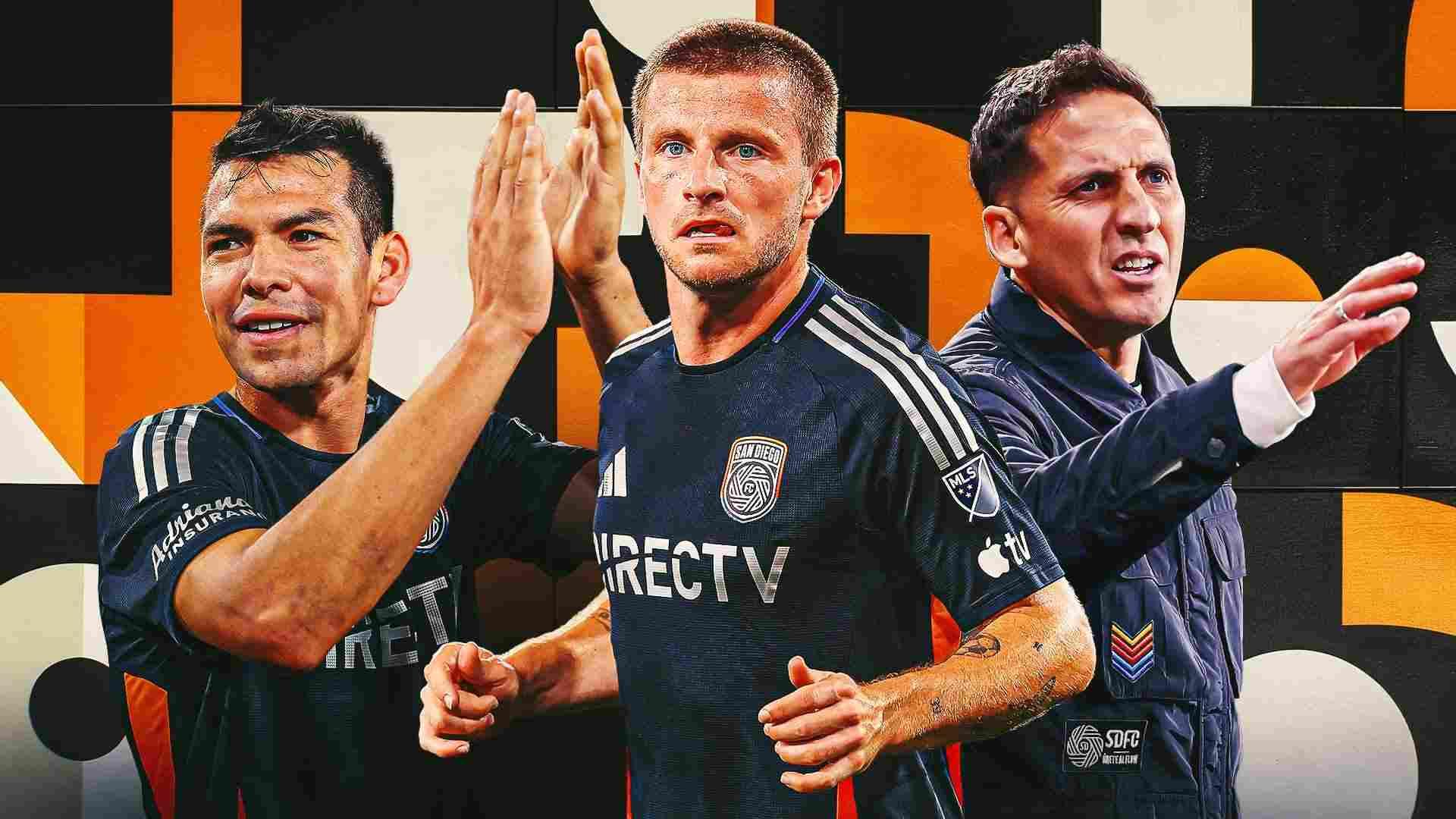
And so we come to San Diego FC, a wonderful soccer team with an unfortunate habit of getting clipped up. They conceded a true howler on Saturday, with goalkeeper Duran Feree passing the ball to the feet of Diego Luna six yards from goal. Luna tapped home. San Diego went on to lose 4-2. It was a moment emblematic of a morbid run for Mikey Varas' side. Once the darlings of the Western Conference, they are winless in six and playing some seriously concerning football. With a disgruntled superstar languishing away from the pitch and a playing style that is stuttering, things aren't looking so sunny in San Diego.
Getty Images Sport
A promising first season
A year ago, no one really knew what to make of San Diego. Their roster construction was odd. Their sporting director, Tyler Heaps, was young enough to still be mixing it in MLS every week. This was an inexperienced bunch, with a still forming youth academy, trying to make it in a packed Southern California soccer scene. To compound it all, they hired Mikey Varas, who, at the time, had not coached a single game of club soccer. This wasn't a youth movement as much as throwing a bunch of inexperienced heads together and trying to make it work.
Expansion franchises are always tricky to project. But the consensus was pretty universal: San Diego would finish somewhere towards the bottom of the West. This was the start of a project. Teething issues would be expected.
But it turned out they might just have known a few things down near the Mexican border. San Diego recruited wisely from Europe, and drafted well, too. They started winning, and never really stopped.
In truth, the signs were there early. They opened the season by traveling north to LA Galaxy, and beat the reigning MLS Cup champions on their own pitch, 2-0. Anders Dreyer, a sure-fire MVP in any other version of MLS that did not include Lionel Messi, scored twice that day. Varas' side was on a roll. They kept going, too, through injury and change.
Sure, they were outmatched in the Western Conference Finals, losing 3-1 to Vancouver. Otherwise, it was as good as debut seasons can get.
Getty Images Sport
Signs of discontent
Yet throughout the whole process, there was some odd background noise about Chucky Lozano. Much was made of their signing of the Mexican National Team star, who seemed to be the kind of ideal big-money star expansion teams need to sell a few jerseys. He cost $12 million, but figured to be worth it.
In truth, it was a stop-start season for the Mexican. He had been in and out of the team due to injury. There were rumors, midway through the season, of some sort of rift between him and Varas.
And then, in October, it boiled over. Who said what to whom remains a little bit unclear. But Lozano was displeased at the prospect of being substituted in one of his side's last regular season fixtures. Varas benched him anyway. He appeared just once more, a late cameo in their 3-1 loss in the Western Conference final.
San Diego have been welcomingly open in their handling of the whole process. Heaps made it clear that Lozano would not be a part of the team's plans going forward. He pointed out that their discontent wasn't linked to one singular moment or sole instance. Rather, this had been built up over time - and played out both in training and during games. Lozano, he conceded, just wasn't the right fit.
Getty Images Sport
'Cut my nose off to spite my own face'
That would normally be fine. This is, in fact, pretty good management. Lozano was an expensive problem. San Diego, if anything, are being refreshingly honest in their willingness to bench him. And none of this would be anything near of a problem if things were running smoothly in Southern California.
However, that is far from true. San Diego, in fact, have spluttered of late. There are enumerate reasons why teams can go on cold spells. Injuries can have their say. So, too, can a bit of bad luck, or perhaps individual errors. San Diego can certainly point to the latter, but the broader issue at play here is that they have one way of playing, and are absolutely married to it.
In fact, the sexy, attacking football that made them one of the best teams to watch in MLS last year has also been their biggest weakness. San Diego are not the only team in this league that likes to play possession-based soccer. And "playing it out of the back" is not the treacherous tactical trope that it used to be. But they badly lack flexibility in their style. Sometimes you can be tidy, and sometimes you just have to kick the ball up the pitch. Some of the best teams in the world do the latter to great effect.
San Diego have found success with the ball on the ground, playing predominantly short passes, and have stuck with it. All the while, results have gone south. Saturday's loss to RSL was particularly bad, but a battering at the hands of an admittedly good Toluca team, and a dire draw against Dallas highlighted a larger weakness: San Diego are far too predictable.
ENJOYED THIS STORY? Add GOAL.com as a preferred source on Google to see more of our reporting.
Getty
What the numbers say
Most coaches would respond. If a team is being figured out week in, week out, the natural reflex is to tweak. Systems don't have to be reinvented, but adjustments can - and should - be made. This is not an altogether uncommon thing in soccer, where scouting and game preparation is so efficient and ubiquitous. Everyone knows how you're going to play. Tweak it. It's not as if this thing is a secret.
The numbers tell the whole story here. They remain the team with the highest possession in the league, having the ball around 63 percent of the time. No one completes more passes per game. San Diego average 600. Inter Miami, the second highest, average 500 - and at a lower percentage. They are outside the top 10 in long balls per 90 minutes.
It's not like they're creating loads of chances, either. San Diego are 15th in expected goals, down from 9th last year. And defensively, the numbers are pretty dire. They are 27th in MLS in expected goals against - a rough estimate of how many goals your team should concede based on the quality of chances afforded to the opponent. They are eighth in shots allowed and fifth in the xG per shot, per WhoScored. In other words, San Diego are conceding a lot of high-quality chances.
Getty Images Sport
Some potential solutions
But figuring out, exactly, what to do is a little bit tricky. Soccer is a complex game, and teams change year by year, not matchweek by matchweek. Major alterations introduced in the middle of the season often feel like knee-jerk reactions rather than reinventions of the tactical wheel.
For Varas and San Diego, there is an obvious solution: it wouldn't kill them to knock it long every now and then. "Just because you play direct doesn't mean you play direct with no purpose. There's absolutely a way to play direct and be purposeful. Liverpool under Jurgen Klopp is a great example of that. They tried to play out of the back, but then, when they needed to play direct, they did. There's a way to do both," Twellman said.
Of course, then it becomes a question of squad building. That requires having a goalkeeper who can fire off accurate long balls, and a mobile No.9 who can hold off defenders and link with attacking players. San Diego don't quite have the personnel there. In effect, this squad was so good last year because it was so well assembled to do one thing. And now, that thing isn't working in the same way.
So, Varas might have found himself at a bit of a crossroads here. San Diego are out of the CONCACAF Champions Cup. Now, they are just playing for MLS and the Leagues Cup. There is, quite likely, a world in which their high possession soccer gets them back on track. They will revert to the mean, with Anders Dreyer picking up goals and assists.
But what if it doesn't? What if new ideas are needed, with fresh faces and perhaps a little more direct attacking quality? Well, they have a Mexican star in exile, supposedly no longer part of their plans, but perhaps part of a potential solution.